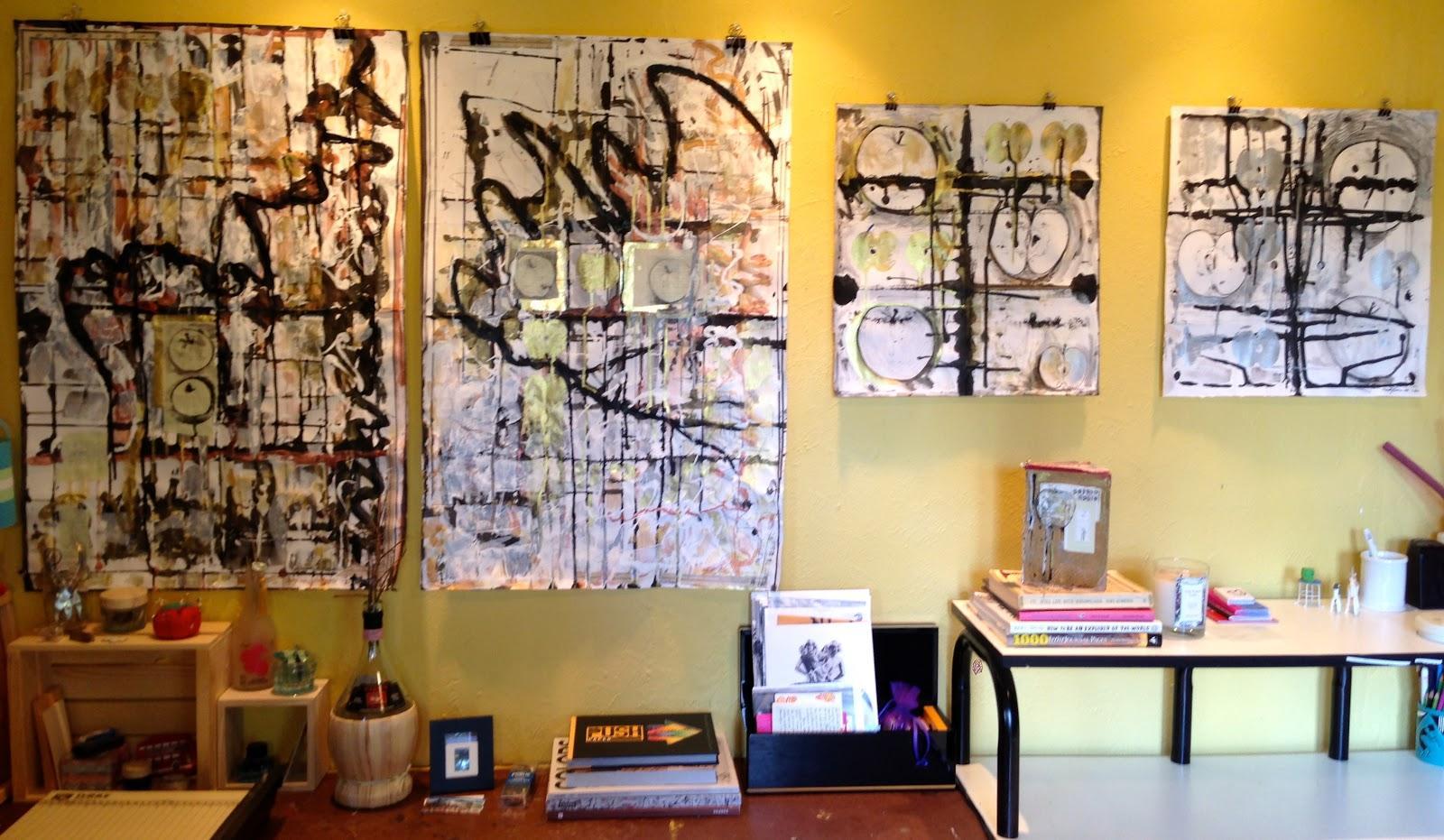
Caren's studio walls
1. How long have you been a teaching artist?
25 years
2. What discipline(s) do you teach?
Visual Arts
Course B: Assessment and Ongoing Strategies for Alameda County Office of Education Integrated Learning Specialist Program (ACOE ILSP).
3. Describe the setting(s) in which you teach.
I teach Visual Art K-4 and a 7th/8th Visual Art Elective at an urban independent Quaker school. I also facilitate adult learners through ACOE ILSP.
4. Describe the relationship between your personal art practice and your art teaching
My personal art practice and art teaching are interwoven. They feed each other. I learn more from my students than they learn from me, hands down (240:1).
5. How do you sustain your art while teaching?
I make art. I read about art, or fiction, or news. I make art when I take notes, during meets or lectures and when I watch TV with my family.
I have art dates every 4-6 weeks with a fellow teaching artist where we talk about our teaching/making practice, share what we have made and make art together. This habit keeps me accountable. I am compelled to share NEW work with Violet every session we have. Deadlines are important.
I sketchbook all school year and make larger works all school vacations. (I make larger work during the school year as well; I see those as more of a “bonus”.)
I have an art making space in my classroom studio, an easel where I keep/display work in progress. I see it always and work on it when I get 10-15 minutes, sometimes more. There is a notepad next to the easel where student are encouraged to give me feedback. They respond to my artwork, I respond to their feedback. It is my desire for my students to see how much they influence what I do.
6. Who shaped your initial thinking about teaching art?
My first and most influential teachers are my parents. They ALWAYS supported my art, encouraging me to find my voice and stand behind it. Their support and exposure to the arts was foundational and lead me to every teacher I have been influenced by since.
My 4th and 5th grade after school artist/teacher, Betty Marchesani taught me how to craft observational drawings and to be limitless in material exploration. With her I learned how to batique, enamel, macramé, draw, paint and play.
My middle school after school/evening artist/teacher, San Francisco local, Sam Provenzano formed my ideas of studio and art conversation, while “destroying to build.”
7. What training in the arts and/or education have you had?
I took outside of school art classes since 2nd grade. I have a BFA from UCLA and a MA in Education specializing in Arts Integration from Lesley University.
8. How do you develop and deepen your teaching practice?
I do as much professional development as possibly can. I question teaching artists I respect, I ask for help from experts, I research best practices, I go to the NAEA convention every year or two, and I observe teachers in action. I talk out my curriculum with colleagues. I draw, I map, I doodle and redesign. I repeat units that are working, refining and changing them every time I reteach it. I drop tired curriculum. I draw from the students, following their excitement and bliss. I am a lifelong learner; I enact what I expect from my students.
9. What are the biggest challenges you face as a teaching artist?
I never have enough TIME.
Class size, and the VOLUME of sound my young students generate. It is affecting my hearing.
Being taken seriously as an educator.
Being taken seriously as an artist.
10. What are the unexpected rewards of being a teaching artist?
How much I receive, learn from and love my students. When I am teaching nothing else exists (it is the same when I am deeply engaged in my art making). I am completely present in the moment. I consider this an unexpected gift. And my students’ adoration makes me feel like a rock star.
11. What advice do you have for artists interested in teaching?
Do field research to learn what this REALLY means, not just intellectually, but FOR REAL. Observe classroom/studios in ACTION. Being a great artist does not ensure great teaching. Connect with great teachers and follow them. Read everything you can, integrate contemporary art into your teaching practice, and steal other’s best practices. Love what you do, love your students and that is what you will get back.
Please share one anecdote of a memorable Teaching Artist experience
I walk into school and a head-to-toe sports clad 4th grade boy asks, “Do I have art today?” I respond, “Yes.” He raises both hands above his head, and shouts out, “YEAH!” We both go on our way, smiling.
In the Studio with Caren Andrews: http://vimeo.com/57342015
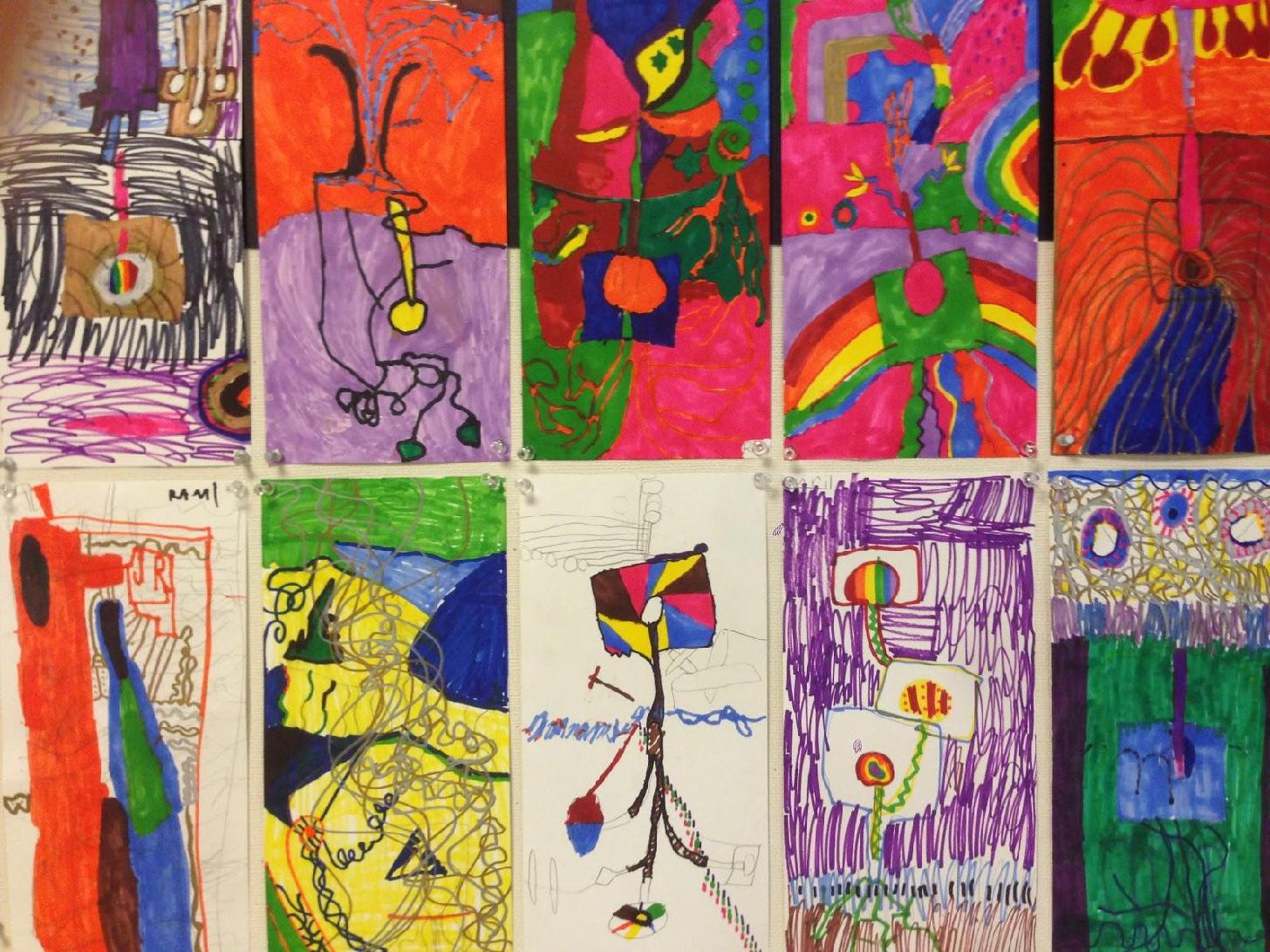 |
| 1st grade: How Does Your Garden Grow? Envisioned Super Power Plants |
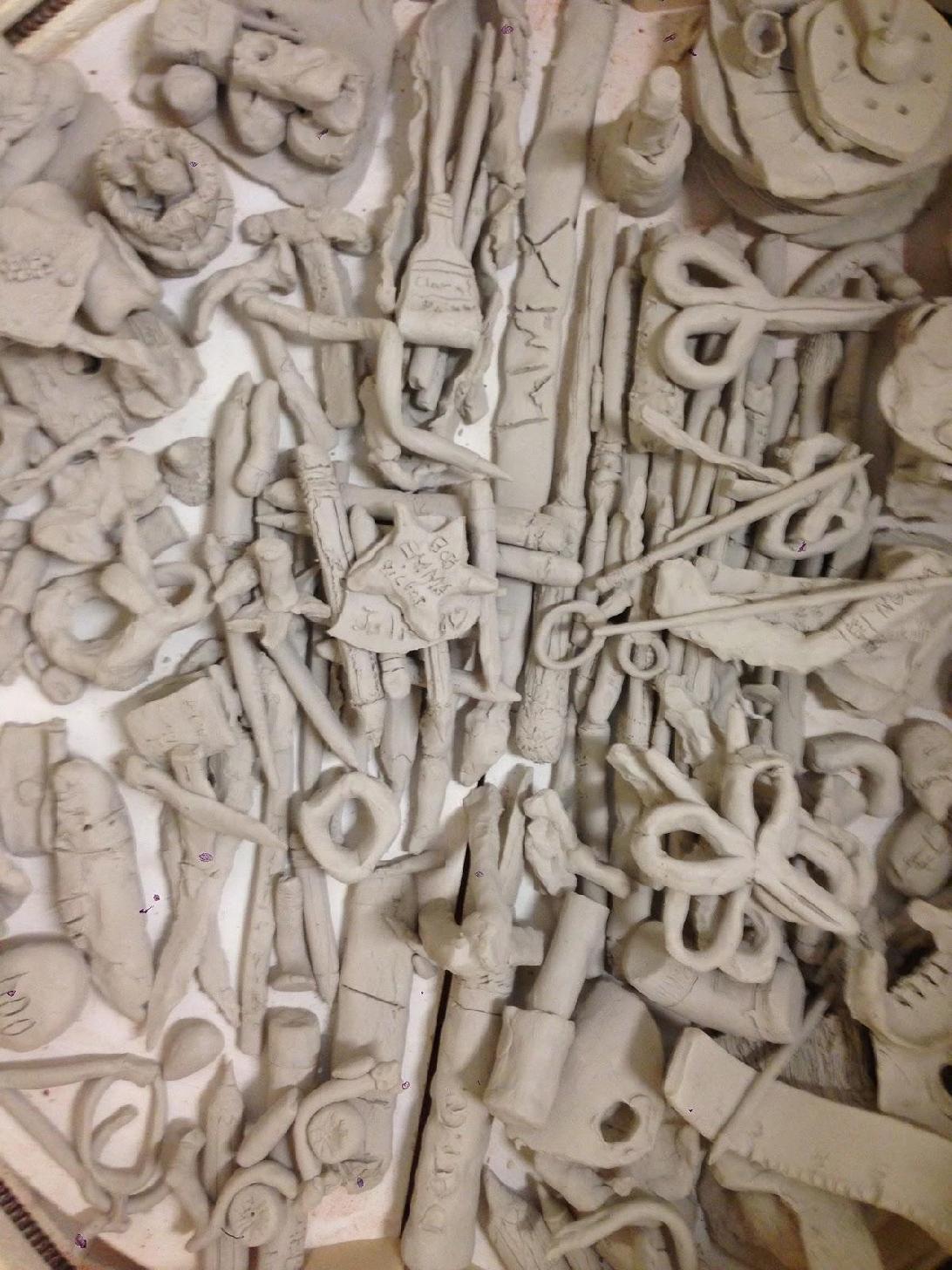
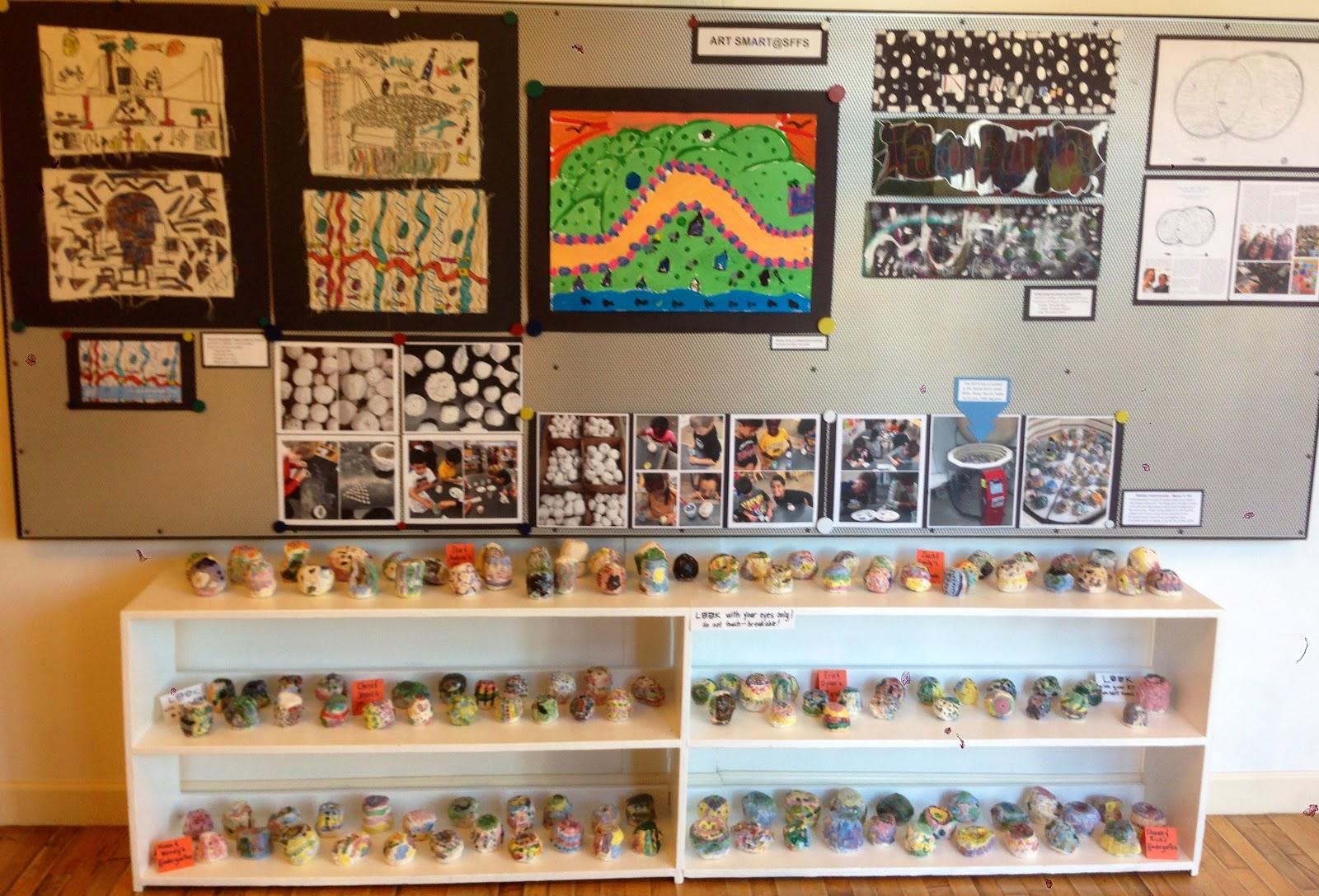
4th grade: Dream Big/Clay Art Tools This is the display that greets you when you come into SFFS: An overview of visual arts: K-8


