Showing posts with label Education. Show all posts

Friday, January 2, 2015

Caren E. Andrews' Improbable Beautiful

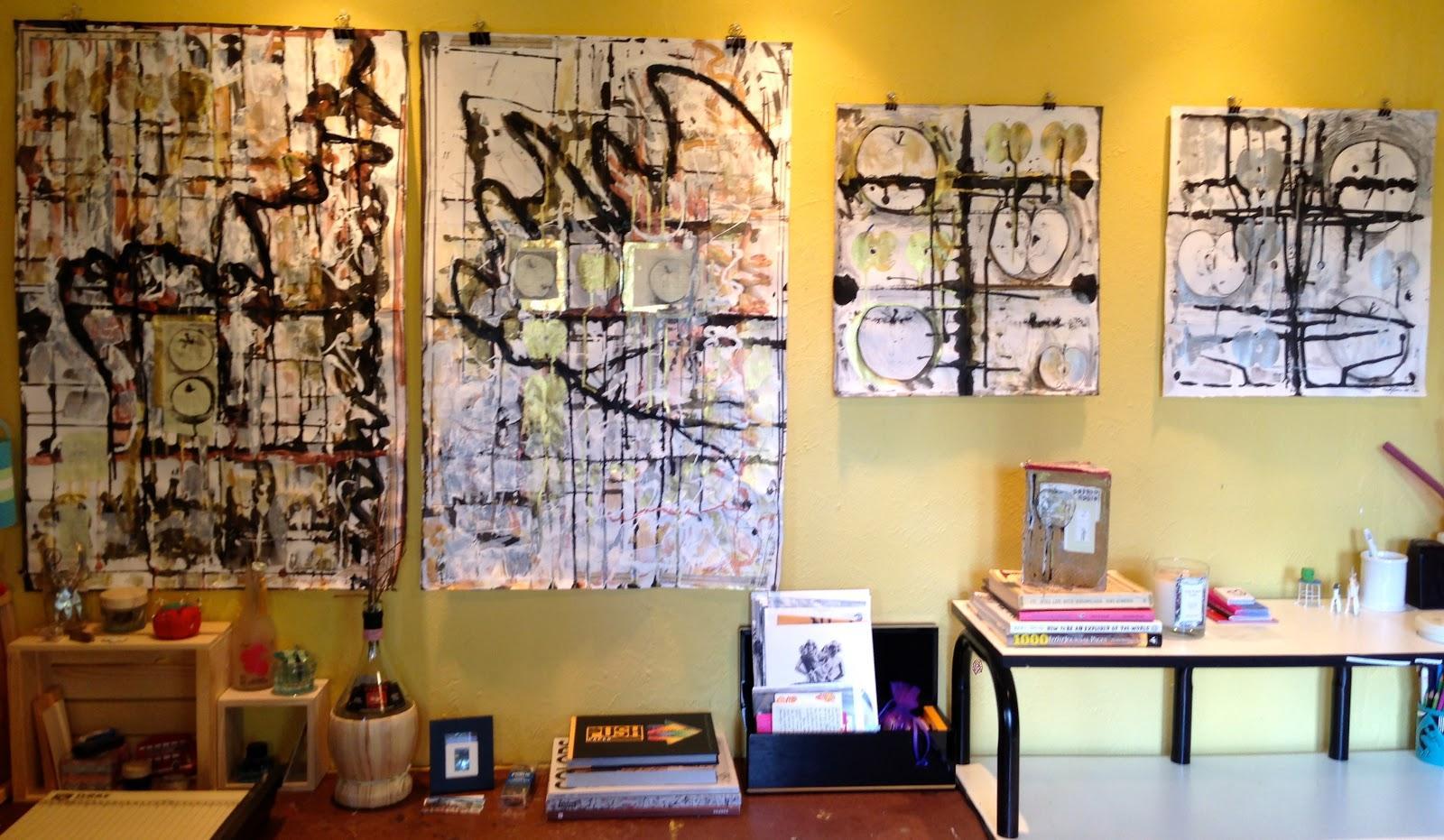
IMG_2799.JPG
Caren's studio walls
1. How long have you been a teaching artist?

25 years

2. What discipline(s) do you teach?

Visual Arts
Course B: Assessment and Ongoing Strategies for Alameda County Office of Education Integrated Learning Specialist Program (ACOE ILSP).

3. Describe the setting(s) in which you teach.

I teach Visual Art K-4 and a 7th/8th Visual Art Elective at an urban independent Quaker school. I also facilitate adult learners through ACOE ILSP.

4. Describe the relationship between your personal art practice and your art teaching

My personal art practice and art teaching are interwoven. They feed each other. I learn more from my students than they learn from me, hands down (240:1).

5. How do you sustain your art while teaching?

I make art. I read about art, or fiction, or news. I make art when I take notes, during meets or lectures and when I watch TV with my family.

I have art dates every 4-6 weeks with a fellow teaching artist where we talk about our teaching/making practice, share what we have made and make art together. This habit keeps me accountable. I am compelled to share NEW work with Violet every session we have. Deadlines are important.

I sketchbook all school year and make larger works all school vacations. (I make larger work during the school year as well; I see those as more of a “bonus”.)

I have an art making space in my classroom studio, an easel where I keep/display work in progress. I see it always and work on it when I get 10-15 minutes, sometimes more. There is a notepad next to the easel where student are encouraged to give me feedback. They respond to my artwork, I respond to their feedback. It is my desire for my students to see how much they influence what I do.
6. Who shaped your initial thinking about teaching art?

My first and most influential teachers are my parents. They ALWAYS supported my art, encouraging me to find my voice and stand behind it. Their support and exposure to the arts was foundational and lead me to every teacher I have been influenced by since.

My 4th and 5th grade after school artist/teacher, Betty Marchesani taught me how to craft observational drawings and to be limitless in material exploration. With her I learned how to batique, enamel, macramé, draw, paint and play.

My middle school after school/evening artist/teacher, San Francisco local, Sam Provenzano formed my ideas of studio and art conversation, while “destroying to build.”

7. What training in the arts and/or education have you had?

I took outside of school art classes since 2nd grade. I have a BFA from UCLA and a MA in Education specializing in Arts Integration from Lesley University.
8. How do you develop and deepen your teaching practice?

I do as much professional development as possibly can. I question teaching artists I respect, I ask for help from experts, I research best practices, I go to the NAEA convention every year or two, and I observe teachers in action. I talk out my curriculum with colleagues. I draw, I map, I doodle and redesign. I repeat units that are working, refining and changing them every time I reteach it. I drop tired curriculum. I draw from the students, following their excitement and bliss. I am a lifelong learner; I enact what I expect from my students.
9. What are the biggest challenges you face as a teaching artist?

I never have enough TIME.
Class size, and the VOLUME of sound my young students generate. It is affecting my hearing.
Being taken seriously as an educator.
Being taken seriously as an artist.

10. What are the unexpected rewards of being a teaching artist?

How much I receive, learn from and love my students. When I am teaching nothing else exists (it is the same when I am deeply engaged in my art making). I am completely present in the moment. I consider this an unexpected gift. And my students’ adoration makes me feel like a rock star.

11. What advice do you have for artists interested in teaching?

Do field research to learn what this REALLY means, not just intellectually, but FOR REAL. Observe classroom/studios in ACTION. Being a great artist does not ensure great teaching. Connect with great teachers and follow them. Read everything you can, integrate contemporary art into your teaching practice, and steal other’s best practices. Love what you do, love your students and that is what you will get back.

Please share one anecdote of a memorable Teaching Artist experience

I walk into school and a head-to-toe sports clad 4th grade boy asks, “Do I have art today?” I respond, “Yes.” He raises both hands above his head, and shouts out, “YEAH!” We both go on our way, smiling.
In the Studio with Caren Andrews: http://vimeo.com/57342015
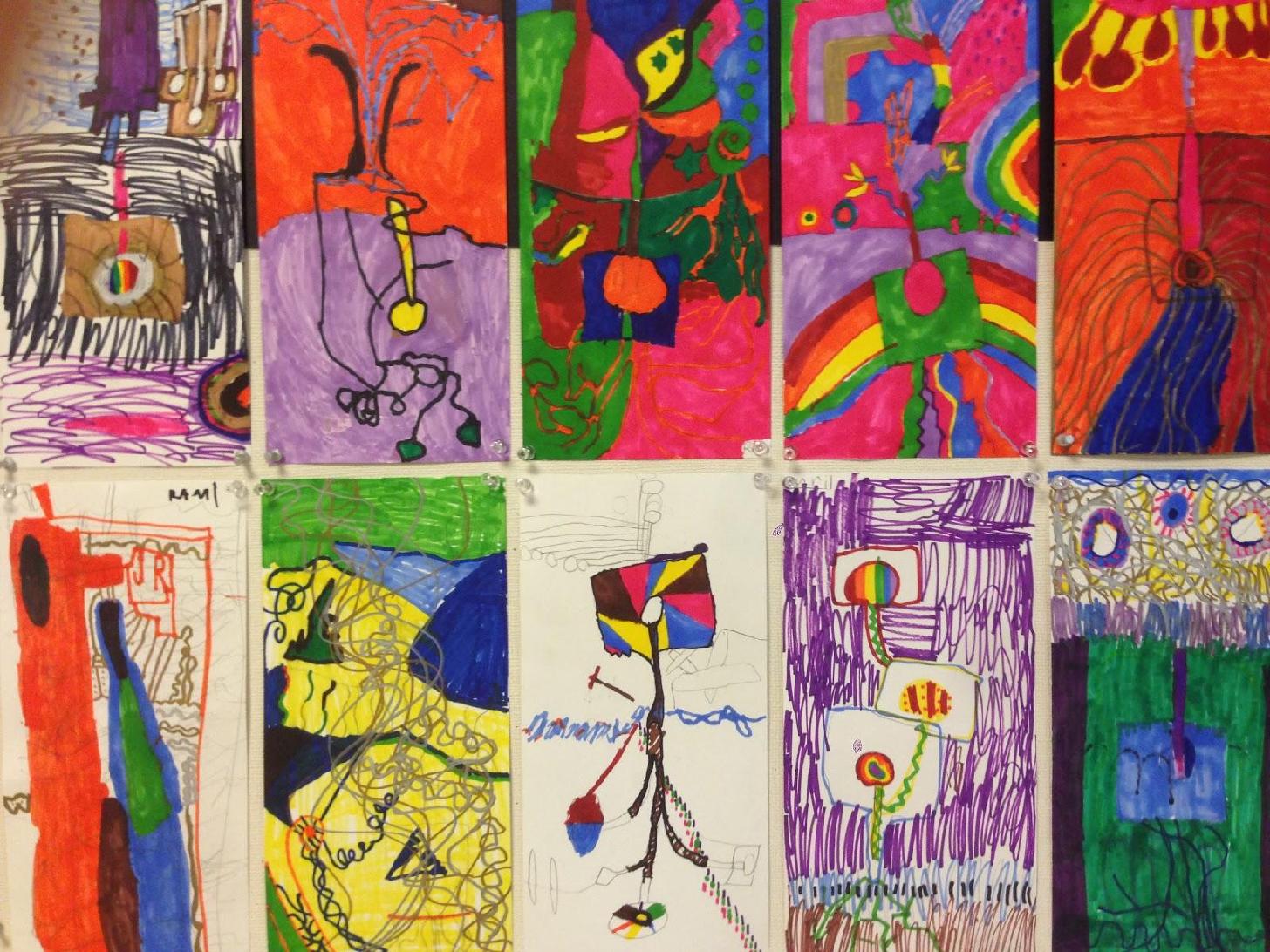
IMG_4201.JPG
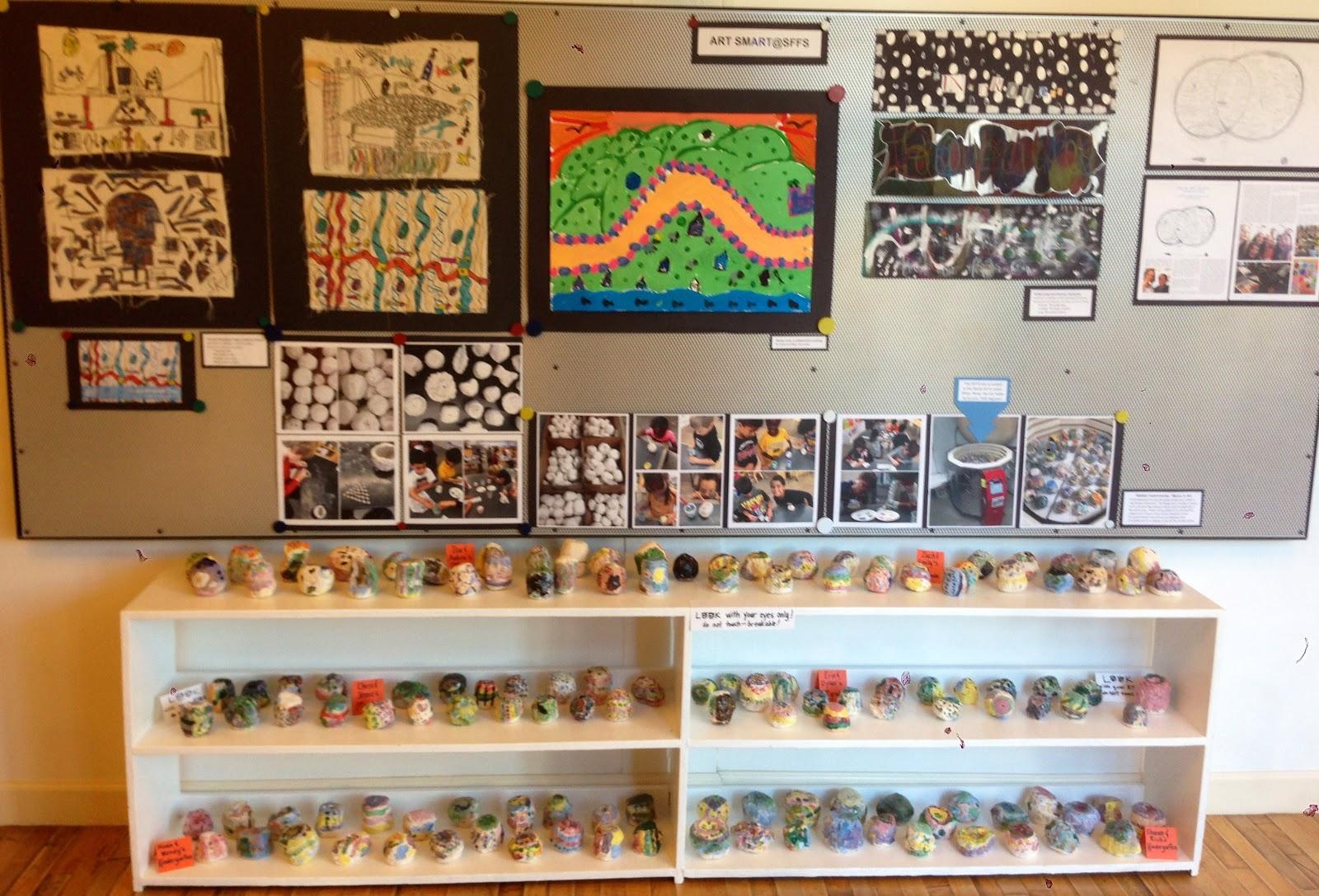
1st grade: How Does Your Garden Grow? Envisioned Super Power Plants
IMG_6639.jpgIMG_6483.jpg
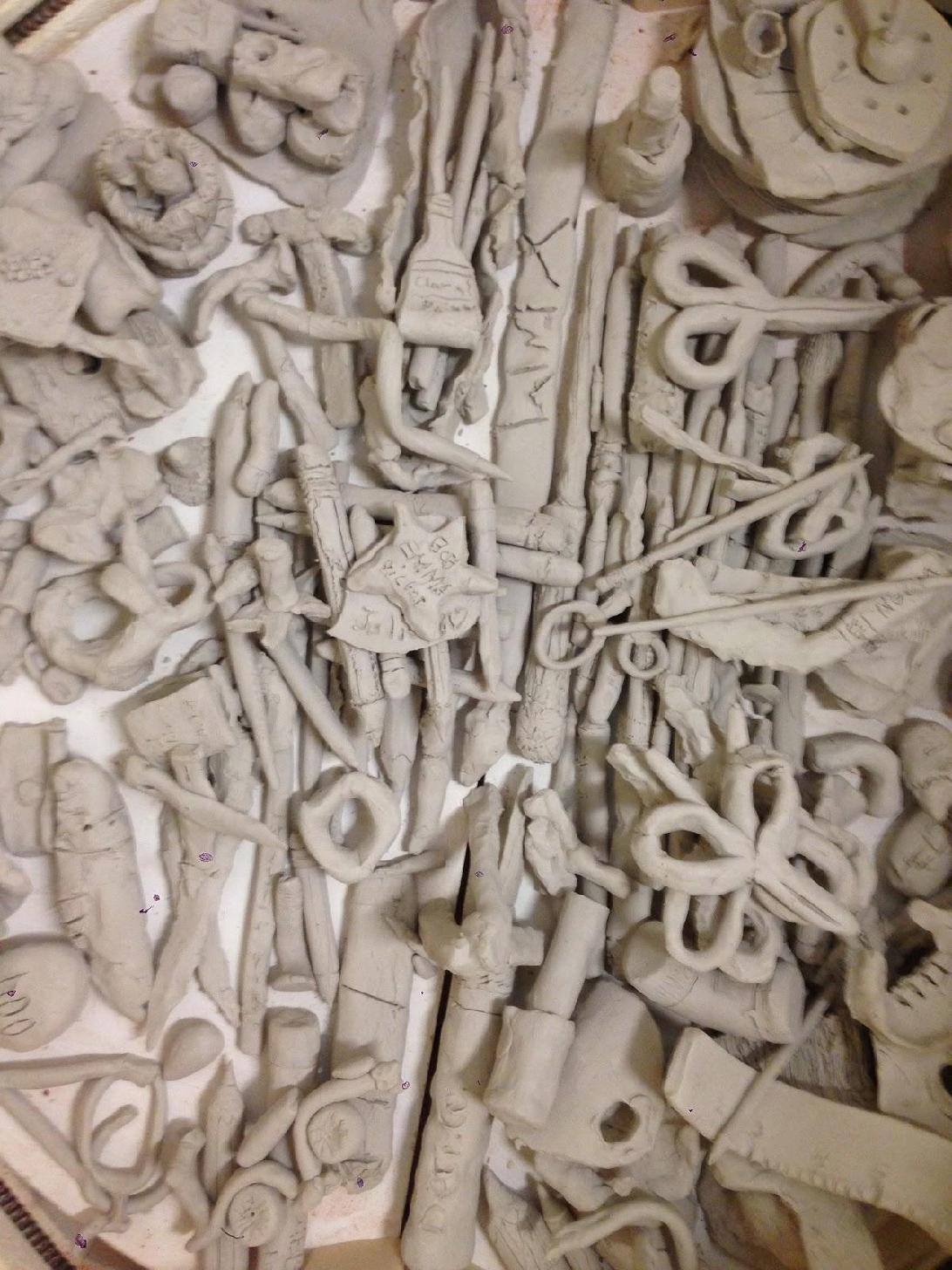
4th grade: Dream Big/Clay Art Tools This is the display that greets you when you come into SFFS: An overview of visual arts: K-8


Saturday, November 29, 2014

Miriam Spilman's Improbable Beautiful

clay bowl by Miriam Spilman

1. How long have you been a teaching artist?

Formally, for five plus years.

2. What discipline(s) do you teach?

I teach visual arts to elementary school children and am particularly excited to be making the transition to choice-based art. I also have provided arts-integration professional development for staff at my school site.

3. Describe the setting(s) in which you teach

K-5 urban public school setting

4. Describe the relationship between your personal art practice and your art teaching?

In some ways they are very divided: hands in clay in my personal art practice and many kinds of visual arts (but unfortunately no clay) in my art teaching. In other ways they are so integrated: We (my students and myself as artisit) are heavily involved in the 8 Studio Habits of Mind: develop craft, engage and persist, envision, express, observe, reflect, stretch and explore, and understand art world.

5. How do you sustain your art while teaching?

It’s a challenge due to time constraints, energy, family commitments. I carve out time whenever I can. Currently I have been able to work consistently every week in a dedicated studio space.

6. Who shaped your initial thinking about teaching art?

In my childhood I had dual experiences, extremes really. One was in school where my art was judged harshly because it did not look exactly like the art teacher’s (which was the requirement). The other was in a much freer setting where I basically explored all kinds of materials without any guidelines or restrictions. I clearly felt more at home with the second and in my child’s mind explained it to myself that the first was school and the second was art. In my own teaching and for my students, I do not want this distinction to develop. Art making (exploration, expression) happens at school, at home, everywhere.

7. What training in the arts and/or education have you had?

I have a teaching credential/ M.A. in education and also an MFA in Creative Inquiry with the emphasis on clay.

I also have completed (and thoroughly enjoyed) the Integrated Learning Specialist program through Alameda County Office of Education.

8. How do you develop and deepen your teaching practice?

What comes to mind first is showing up, no matter what, putting in the time. A close second is learning from other artists and teachers, books, videos, nature, staying loose and experimenting, observation, day dreaming and particularly all types of artist demonstrations where process as well as product is examined.

9. What are the biggest challenges you face as a teaching artist?

Time! Sporadic (or non-existent) funding.

10. What are the unexpected rewards of being a teaching artist?
It may be a cliché, however I do learn so much from my students—especially since they say whatever is on their mind and make sense of what they are seeing in ways that stretch my own view. Teaching art is a second career for me, and very different than the first. Because of this I feel very fortunate to be involved in what interests and nourishes me every day---art making, the art world, arts oriented colleagues, working with my artist students and everything the 8 Studio Habits of Mind involve.

11. What advice do you have for artists interested in teaching?

Dig deep for hidden reservoirs of patience, humor, persistence, inspiration---you will need them all! Learn from and enjoy every opportunity to participate in professional development, collaboration and conversations with teacher colleagues, other artists, students’ families and community members.

*Please share one anecdote of a memorable Teaching Artist experience

Recently, one of my first grade boys was very engrossed in his art making, standing, talking, moving around all while drawing and gluing collage materials. I walked by and heard him suddenly say out loud, “Oh no, I have a problem. I have a problem. What am I going to do? I have a problem,” with great distress and with his eyes fixed on his work. I did not interrupt him, just quietly watched as he tried –while continuing his conversation with himself--to figure out how to fit his carefully cut out- but way too big-- collage materials onto his paper in a designated spot. Coming back five minutes later, my student was still very engrossed in his art making and still talking, moving, etc. This time he was saying, “I love art. I love my colors. I love my art,” while drawing on top of the carefully cut out collage materials that were hanging mostly off the edge of his paper. He seemed immensely satisfied with what was happening now.

This is a small, everyday type of experience, however it felt like being given a gift. We are all artists in a community art studio when in the school art room. To be fortunate enough to witness my student’s engagement, process, choices, problem solving, and joy and pride while working on his artwork, to encourage and nurture, verbally and non-verbally to students: please do everything you need to do (again the 8 Studio Habits of Mind), to create and express yourself through your artwork, this is what being a teaching artist is all about for me.

Tuesday, July 8, 2014

Sam Weinberg's Improbable Beautiful

Sam's work with recycled material

1. How long have you been a teaching artist?
I consider the beginning of my being an artist around 9 or 10 years old when I would take my dad's camera to document and explore any and all types of events. I started to teach art classes back in high school, but have been doing so professionally since 2011. All in all, approximately 10 years at this point? ... woah.

2. What discipline(s) do you teach?
Drawing, painting, sculpture, collage, paper-making, digital photography, graphic arts, comics, ceramics... just about anything that my students will enjoy and/or aligns with some of their core curriculum.

3. Describe the setting(s) in which you teach. (K-5, after school, university, community center, etc &)
I teach at a K-8 charter school in Oakland. CA. There is a very diverse student population both culturally and socio-economically.

4. Describe the relationship between your personal art practice and your art teaching?
The focus in my own practice involves 2 primary elements: utilizing materials and resources immediately or already available, and creating something useful or functional. This often means a focus on resourcefulness in the form of using recycled and found materials, which is very helpful as a teacher with a limited budget and about 275 students. The functionality element comes into my integration approach where I try to create art lessons that connect directly with what the students are learning about in their core classes. I use art-making as a tool to reveal the connections between our visual, social, historical, scientific and mathematical worlds!

5. How do you sustain your art while teaching?
It has been very difficult. I feel like I have very limited time with the demands of my job (I am also an after school instructor and the facilities coordinator) and very limited space in my tiny apartment that it's hard to make the kind of art I would like. But that's really all excuses, and I have been able to work on smaller things like collage when I make the time for it. I took a drawing class, and found that I was much more productive when given assignments and deadlines and such. Ultimately, it comes down to making the time and doing away with excuses... easier said than done!

6. Who shaped your initial thinking about teaching art?
I'd have to say all the teachers at Pittsburgh's Manchester Craftsmen's Guild. This is an amazing after-school arts program that is free to all Pittsburgh Public School students. The experience differed so much from the art classes I took at school that I was inspired to become an arts educator just to try to replicate their approach directly in schools. I appreciated the art teachers I had in high school, but most of the time it just felt like arts and crafts. MCG showed me how empowering an arts education could be and I hope to convey that to my own students.

7. What training in the arts and/or education have you had?
I earned my BFA from the Maryland Institute College of Art in 2010, and then my MAT from MICA in 2011. I most recently completed the Integrated Learning Specialist Program offered by the Alameda County Office of Education. I have also been taking art classes again at Berkley City College just to stay on my game and keep the art-making going. Fun and cheap, I recommend it to anyone looking for some inspiration and motivation!

8. How do you develop and deepen your teaching practice?
I try to engage in as much PD as possible... the ILSP courses have had a huge impact on my teaching practice and philosophy. I've also tried to reach out to other teaching professionals in the area to observe their classrooms and pick their brains on how they conduct a successful art program.  

9. What are the biggest challenges you face as a teaching artist?
MAKING MY OWN ART!!! I always try to do prototypes of the lessons I teach, which is fun and interesting, but definitely not always what I would make on my own.

10. What are the unexpected rewards of being a teaching artist?
Some of the appreciation that I receive from students who have had a fun or transformative time in my class. Seeing a student all of a sudden "get" something and apply it right away is always inspiring too. I think the best however is when a parent approaches me to tell me about how their child tells them all about art class and how much fun it is, even when the kid never says anything to me! Teaching is not always a thankful profession but it's really nice when it is!

11. What advice do you have for artists interested in teaching?
I think teaching your ideas is one of the best ways for you to really articulate your own thinking. If you are able to effectively communicate your own approach to art making it shows and can often generate a greater understanding of your own practice. You will be amazed at some of the directions your students will take some of your ideas. The process of teaching will enhance and possibly transform your own art practice.

*Bonus*
Please share one anecdote of a memorable Teaching Artist experience.

All I'll say is this.... KIDS LOVE PAPER-MAKING! If you get them involved in the process from beginning (recycling and ripping up paper scraps) to end (arranging, pressing and drying the pulp) they will be engaged the entire time! They love getting messy, playing with the slop, and creating interesting patterns with different colored paper. Go for it!

Sunday, June 22, 2014

No Mountain High Enough...


Learning to teach is like climbing a mountain only to find there's an even higher mountain beyond it. I have a LOVE/HATE relationship with being a teaching artist. My love starts with my love of schools.

I LOVE school.

I love being in schools. I love hallways, bulletin board displays, the sounds of chairs scarping the floors, pencil taping, kids scurrying to and from the bathroom, the hush and then the clamor as kids fall out of class to the yard. The bright colors, the hodge podgeness, the order and the chaos.

I love kids. They're nuts. They're funny and surprising and amazing.

I LOVE, LOVE, LOVE teachers. Seriously? Who works harder for less? Teachers, they keep getting pummeled by our ignorant society. Still they show up at 7:15am to cut paper, grade tests, meet parents before they go to work, sweep the rugs  (it's not in the janitor's contract, or there is no janitor) fed the gecko, lizard, fish, tadpoles, feed the early kid, the homeless kid, do hair for the neglected girls, and wash the faces of the dirty children. And don't forget they actually teach tiny crazy people to read, write, add and subtract and more. AND they teach manners, caring, social, environmental and school yard justice. They sing, dance, drum and generally make fools of themselves so other people's  video addicted, attention limited, entitled, lost, lazy, rude, sad, sweet, spoiled, precious children can become engaged active citizens.

I love school.

I love the unsung heroes of every school. The front office ladies and men who hold down the fort, provide tissue (often paid for by them since, you know, tissue is a luxury and all), give band aids, advice, and tardy slips. They know who is fake crying to get out of class and who is really ill or sad. They are mean and strict in the best grandmother, great auntie or uncle kinda way. They know all the parents and who is in after care, who has a doctor or dentist appointment. They know who waits outside alone after school because mom is always late. They know which forms teachers have to fill out, they order your supplies and make sure they get to you on time, running the ins and outs of dry erase markers, No.#2 pencils and paper clips like a mafia syndicate (Oops, you didn't get that box of paper? Guess you shouldn't be so rude when you ask! Fuggeta 'boutit!)

I love school.

I love the crazy structure. Recess at 10:40 - 10:55. Whaaat?! Few other work environments run off the clock like that. I recently taught a group of teachers. When I said lunch at noon. There was a collective cry of Noooooo! That was too late. They wanted to eat at 11:35. We compromised with 11:45. bells ring at the oddest times  Nothing begins or stops on the hour or half hour. Always 55, 35, 25. Why? BECAUSE schools have to operate with illogical precision, no minute wasted.

There's sooo much more to love and yet and still I also hate schools, I hate teaching art, I'm over it! As I type that I'm already thinking about how I will rearrange my room, the systems I hope to put in place.

Tuesday, June 3, 2014

Art makes Creative, Happy, Brave Kids

Art makes creative, happy, brave kids!

Our centers experiment was a success.  Choice Based Art is here to stay! As a first attempt my students and I learned a lot. I look forward to fall and many improvements in the system. The kids did great work and more importantly they challenged themselves and they grew. When asked to give three words that describe the feeling of creating a treasured piece of art here are some of the words kids said:

Creative
Happy
Brave
Sad
Good
Amazing
Powerful
Radical
Great

 ACOE's Inventing Our Future Summer Institute.

More Teaching Artists needed! If you are out there in the "interwebs" reading this PLEASE fill out the Teaching Artist Questionnaire so we can continue to build a resource for each other. Read over past post to see what other Teaching Artists have to say about their art and teaching. get inspired, participate. The link is right u there on the right side...click it! Thanks!

Thursday, January 9, 2014

Big Ideas Fest's Improbable Beautiful


In December I was lucky enough to attend the Big Ideas Fest (BiF) in Half Moon Bay (http://www.bigideasfest.org/about-big-ideas-fest-2013). BiF is a conference like none other combining design thinking and improv in the service of innovation for education. This was my fourth time at the conference and one of the most interesting and productive experiences yet.

The thing about Big idea Fest is there's a lot. I mean a LOT! Rapid fire speakers, key notes, action collabs, Road Trip Nation, and 'smores. This means there's quite a bit to digest and for me it takes a while to distill it all down. In fact I'm going to talk about the key note speaker from last year, George Lakoff, because I am still processing all of the information garnered from his talk. Lakoff according to Wikipedia is an American cognitive linguist, best known for his thesis that lives of individuals are significantly influenced by the central metaphors they use to explain complex phenomena. He currently teaches at UC Berkeley.

George Lakoff tells us metaphors are at the heart of language and communication. Metaphors are a way of being more precise. At the Big Ideas Fest last year he used love as an example. How do we speak about love? We use metaphors (these usually contain image schema of motion). I'm falling in love, this relationship is a dead end, I'm so over him, things are going smoothly, etc.. Since hearing his talk I've been thinking a lot about metaphors and how important they are. We basically can't communicate our true feelings without metaphors. Metaphors help us be precise with language. The issues that are central to our heart , love, loss, joy, pain they need metaphor to be talked about with precision. 

As teaching artists we are well versed in metaphors. What I am interested in is how we show teachers, parents and administrators that Art is about communicating through metaphor and is therefor about communicating with precision? We teach students to express what they feel, think, believe, dream and hope. They are able to express often complex ideas and emotions through a symbol system. This is important work. Art (and I am including poetry, music, dance and drama) is at the core of clear and precise human communication. How do you use metaphor in your work and your classes?

I've been pondering the meaning of metaphors for a year now. George Lakoff was only one of the amazing speakers I've heard at ISKME's Big Ideas Fest. The presenters from the 2013 conference were equally amazing. For 2014 I plan to ponder the meaning of social objects and new ways of interacting in museums and beyond. To find out more check out their website and follow them on Twitter.

Happy New Year!

Saturday, November 2, 2013

Dr. Jerry M. James' Improbable Beautiful


Beginner's Luck, Jerry M. James


1. How long have you been a teaching artist?  

I was a teaching artist at Lincoln Center Institute (LCI) for 15 years

2. What discipline(s) do you teach?

  Visual Art

3. Describe the setting(s) in which you teach: K-5, after school, university, community center, etc…

 All of the above

4. Who shaped your initial thinking about teaching art?

Fay Zetlin,  Maxine Greene, John Toth, Paulo Friere

5. Describe the relationship between your personal art practice and your art teaching?

When I was a teaching artist, I participated group shows with other TAS. Also had my own shows and projects.  I felt that in particular, teaching the Aesthetic Education model informed my philosophy of art and piqued my curiosity about all the arts. Leading sessions at museums opened my eyes to different genres, ultimately affecting my own work in positive ways

6. How do you sustain your art while teaching?

Maintaining a private studio and selling my work

7. What training in the arts and/or education have you had?

BFA and MFA in painting Ed.D, in art education

8. What are the biggest challenges you face as a teaching artist?

One challenge was switching approaches to suit different arts organizations.  Some were more skills based, others more aesthetic still others more arts integrated.  Since my work involved teaching in other states and countries managing my schedule was challenging at times.  Fortunately, as a full-time TA I had four weeks paid vacation time I used blocks of time to prepare for shows etc.

9. What are the unexpected rewards of being a teaching artist?

The joy evident as students learn, witnessing improved collaboration among school communities, planning with teachers and other stakeholders. The transformative effects of arts experiences on people of all ages, as reported in discussions and written  reflections.   As an administrator now, watching  the professionalization of the TA field unfold has been a pleasant surprise!

10. What advice do you have for other artists interested in teaching?

Learn how to facilitate learning, rather than only teaching what you know.  Many of your students will benefit more from working on big ideas with TAs than they will from learning a specific artistic skill.

Please share one anecdote of a memorable Teaching Artist experience.

I  usually time the components of workshops. Demos, if any, are short. I devote most time to arts making, which is interspersed with reflective activities of varying lengths, One of these, poetry writing, usually lasts five minutes.  In Mexico, however,  participants wrote poetry for 20 minutes and they could have kept going! It was my first direct experience of educators in another culture having a relationship with culture that was much different than mine. For them poetry was as natural as prose.

Please share any upcoming events or shows you are involved in so we can find out more about your personal art practice.


Friday, October 11, 2013

Daniel Kelin's Improbable Beautiful


 1. How long have you been a teaching artist?
Nigh on 30 years 
2. What discipline(s) do you teach?
 Theatre/Drama
3. Describe the setting(s) in which you teach.
In-School, after school, professional theatre, community centers, university...in just about every setting I can 
4. Who shaped your initial thinking about teaching art?
 Very probably my theatre teachers in elementary and high school, but it is hard to pinpoint one person or situation
5. Describe the relationship between your personal art practice and your art teaching?
 A tightly woven rope, as each depneds on the other for strength of purpose and effectiveness. Each has influenced the other to the degree that it is hard to know what was influenced by the other.  Each gives me the opportunity to practice approaches in different settings to gauge effectiveness.
6. How do you sustain your art while teaching?
My art is a part of my teaching so it is sustained by continuing to teach.  I also don't believe that I should be doing 'an' art, but engage in artistic pursuit in various ways and disciplines.
7. What training in the arts and/or education have you had?
My art was college and university, primarily and since then workshops as I can.  Education was initially practice.  There were not many opportunities for training when I first started.  Now it is sustained through conferences, workshops and collegial dialogues.  In addition I lead many trainings and learn through those.
8. What are the biggest challenges you face as a teaching artist?
The fact that in the US there is still the sense that TEACHING art is the bastard child of DOING art.  Stupid, egotistical attitude that cultivates an elitist attitude and makes it harder to rally support for the arts.
9. What are the unexpected rewards of being a teaching artist?
Relationships, renewal of purpose, witnessing the authenticity of response on the part of young children 
10. What advice do you have for other artists interested in teaching?
Reflect, often. Adjust to your setting, don't make the setting fit you. Be prepared to change at any moment and embrace it. There is no 'right' way.  Learn as you do, don't set yourself up as the expert.
Please share one anecdote of a memorable Teaching Artist experience or your favorite resources for lessons.

FAVORITE: Viewpoints, Studio Thinking, Releasing the Imagination 
Please share any upcoming events or shows you are involved in so we can find out more about your personal art practice.

Saturday, August 3, 2013

Jimmy Fallon's Improbable Beautiful

OK so Jimmy Fallon didn't fill out the teaching artist questionnaire but I'm sure he would if I asked!
He is a teaching artist by my (loose) definition!

This is just pure fun. I feel I can justify putting on the blog because they are using classroom instruments, after all.
ENJOY!
Hey, hey, HEY!

Jimmy Fallon, Robin Thicke & The Roots "Blurred Lines"


 You know you love the banana shaker!